 TruVet Pet Care Clinic
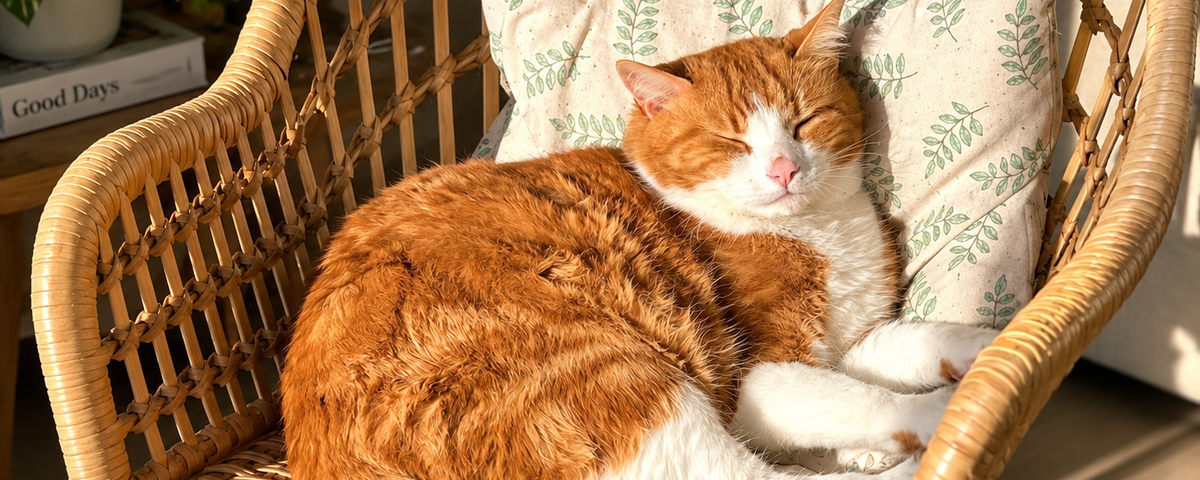
Your cat spots a bird through the window, and suddenly her jaw starts vibrating in a rapid, chattering sound unlike any normal meow. Here's what this strange, genuinely fascinating behaviour actually means.
That Weird "Ek-ek-ek": Why Cats Chatter at Birds
By Dr. Brajmadhuri, TruVet Pet Care Clinic, Sector 79, Gurgaon
Your cat spots a bird through the window, and suddenly her jaw starts vibrating in a rapid, chattering sound unlike any normal meow. Here is what this strange, genuinely fascinating behaviour actually means.
It is one of the more distinctive sounds a cat makes, and completely unlike anything else in her usual vocal range. A cat fixes her eyes on a bird or squirrel through a window, her tail twitches, and her jaw begins vibrating rapidly in a chattering, almost stuttering sound, sometimes written as ek-ek-ek. It looks strange, occasionally even a little worrying to a new cat owner, but it is a well recognised behaviour with a few genuinely interesting explanations behind it.
The leading explanation: frustration mixed with instinct
The most widely accepted explanation ties chattering directly to a cat's hunting instinct meeting an obstacle she cannot overcome, the glass of a window. A cat spotting genuine prey outdoors experiences a full activation of her predatory instinct, the intense focus, the readiness to stalk and pounce, but the glass barrier means she physically cannot follow through on any of it. The chattering is thought to reflect this specific combination of high arousal and blocked action, essentially an instinctive response with nowhere to actually go.
A second theory: rehearsing the killing bite
A related explanation focuses specifically on the physical mechanics of the chatter itself. Some behaviourists suggest the rapid jaw movement mimics the motion of a cat's killing bite, the precise, fast jaw action a cat uses to dispatch small prey once caught. Under this theory, chattering at a bird she cannot reach may be something close to an unconscious rehearsal of that final capture motion, triggered by the sight of prey even though no actual catch is possible in the moment.
A genuinely surprising theory: mimicking prey calls
One of the more remarkable explanations comes from research on wild cats rather than domestic ones specifically. Researchers studying wildcats in South America have documented at least one species imitating the specific vocal calls of tamarin monkeys, effectively using a form of vocal mimicry to lure the primates within striking distance. While this research focused on a wild species rather than the domestic cat sitting on your windowsill, it opens a genuinely interesting possibility that at least some chattering behaviour across the broader cat family may reflect an instinctive form of vocal mimicry aimed at prey, rather than simple frustration alone.
Why the exact explanation likely varies
It is worth being honest that no single explanation has been definitively proven as the complete answer, and it is entirely possible that different elements, frustrated predatory drive, rehearsed bite mechanics, and some degree of instinctive vocal mimicry, all contribute to this same behaviour in different combinations across different cats and different situations. What researchers broadly agree on is that chattering is directly tied to a cat's hunting instinct being triggered by visible prey she cannot access, rather than being random or meaningless noise.
Is chattering ever a sign of a problem
For the vast majority of cats, chattering at a bird or squirrel through a window is a completely normal, harmless expression of natural hunting instinct, and nothing about it needs correcting or worrying about on its own. It is worth paying closer attention only if chattering appears alongside other signs of genuine distress or discomfort, unusual drooling unrelated to the behaviour itself, signs of dental pain, or a broader pattern of unusual vocalisation that seems disconnected from any visible trigger like prey outside a window, since these could point toward something separate worth mentioning at a checkup.
What this behaviour tells us about indoor cats specifically
This chattering response is also a genuinely useful, visible reminder of just how intact a cat's hunting instinct remains, even in a cat who has spent her entire life indoors with no actual hunting experience at all. This instinct does not fade simply because a cat is well fed and living comfortably, which is part of why providing genuine outlets for this drive matters for indoor cats specifically. Interactive play using toys that mimic the movement of prey, regular scheduled play sessions rather than occasional, unpredictable ones, and window perches that let a cat safely observe outdoor activity all give this instinct somewhere real to go, even in a fully indoor lifestyle.
The TruVet takeaway
That strange, rapid chattering sound your cat makes at a bird through the window is a genuine window into her hunting instinct at work, most likely reflecting some combination of predatory frustration, rehearsed bite mechanics, and possibly an instinctive echo of vocal mimicry seen in wild relatives. It is a completely normal, harmless behaviour in the vast majority of cats, and honestly one of the more charming reminders that even the most pampered indoor cat is still, underneath it all, a genuine hunter.
TruVet Pet Care Clinic is at Shop No 4-6, opposite Bestech Park View Altura, Sector 79, Naurangpur, Gurugram, Haryana 122051. Dr. Brajmadhuri personally examines every patient, and we are open all seven days from 10am to 8pm for OPD consultation, vaccination, deworming, surgery, and health checkups for dogs and cats. WhatsApp us at +91 98710 10355 if anything about your cat's behaviour has you curious or concerned.
Frequently asked questions.
Is chattering the same thing as a cat's normal meow, just faster?
No, it is a genuinely distinct vocalisation, involving rapid jaw movement rather than the vocal cord use behind a typical meow, and it appears specifically in response to visible prey rather than the many other reasons a cat might meow.
My cat only chatters at birds, never at toys during play. Is that normal?
Yes, this is common, since the chattering response seems specifically tied to genuine prey visible at a distance the cat cannot close, like through a window, rather than to interactive play where she can actually engage and pounce.
Should I be worried my cat is stressed every time she chatters?
Not generally. Mild frustration at not being able to reach visible prey is a normal part of this behaviour, and it is not the same as a genuine stress or welfare concern, provided it happens in the specific context of spotting outdoor prey.
Can I do anything to reduce how often my cat chatters at the window?
You do not necessarily need to, since it is a harmless behaviour, but providing regular interactive play sessions that let her actually complete a stalk and pounce cycle on a toy can help satisfy the same underlying instinct in a way she can fully act on.
Do all cats chatter, or is it specific to certain individuals?
Most cats show some version of this behaviour when presented with visible, inaccessible prey, though the intensity and frequency genuinely varies between individual cats.
Is chattering seen in kittens too, or does it develop later?
It can appear fairly early, often alongside the general development of a kitten's predatory play behaviour, though like most behaviours it can become more pronounced or refined as a cat matures.
Questions for Dr. Brajmadhuri?
Open all 7 days, 10am to 8pm. Walk-in OPD welcome.