 TruVet Pet Care Clinic
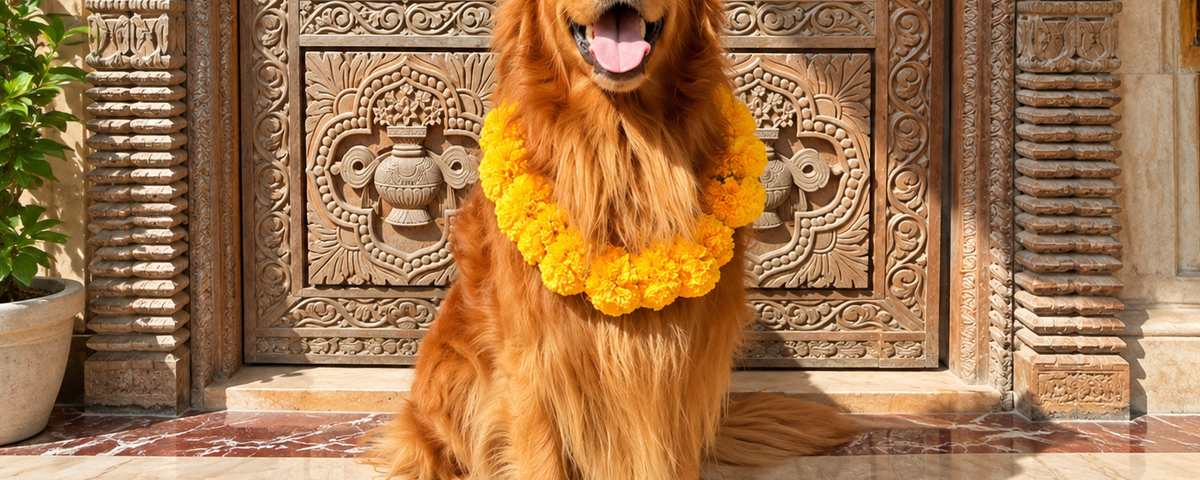
A handful of raisins from a Diwali dry fruit box can put a dog's kidneys at risk, and tamarind may do the same. Here is where these foods hide in festive cooking, what the science does and does not yet explain, and what to do if your dog helps himself.
The Kishmish Problem: Raisins, Grapes and Tamarind on the Diwali Table
By Dr. Brajmadhuri, TruVet Pet Care Clinic, Sector 79, Gurgaon
Diwali is the one time of year when the house is full of food that is not usually there. Sweets are made in bulk, dry fruit boxes arrive from relatives, guests keep the plates moving, and a dog who normally sits politely at mealtimes finds that the floor has become a buffet. Most of this food is simply unhealthy for a dog, and a stomach upset is the usual price. One small ingredient, however, deserves its own warning, because it can do far more harm than its size suggests. That ingredient is the humble raisin, or kishmish.
Why raisins and grapes are a genuine emergency
Grapes and raisins can cause acute kidney injury in dogs. The Merck Veterinary Manual describes the usual pattern: vomiting begins within about six to twelve hours of eating them, and in dogs who go on to develop kidney trouble, the damage becomes evident over the following one to three days. The manual also notes that the amount that causes a problem varies widely from dog to dog, and it cites a figure of concern of roughly one grape or raisin per 4.5 kilograms of body weight. That is a warning level and not a safe limit, which means a small dog can be in trouble after a surprisingly small mouthful. You can read the full entry on the Merck Veterinary Manual's page on grape, raisin and tamarind toxicosis.
What makes this tricky is that dogs react differently. Some dogs eat a large number of raisins and seem fine, and others become seriously ill after very few. Because nobody can predict which kind of dog yours is, the safe approach is to treat every raisin or grape swallowed by a dog as a reason to call a vet, rather than a reason to wait and watch.
What scientists have worked out, and what they have not
For a very long time, nobody knew what in grapes was poisonous to dogs. Several theories came and went, including mould, pesticides and heavy metals, and none of them held up. More recently, a veterinarian looking into a dog's poisoning from homemade playdough noticed that the signs did not match what was expected. The playdough recipe contained cream of tartar, which also contains tartaric acid, and tartaric acid is a compound found naturally in grapes. Poison control veterinarians at the ASPCA went on to name tartaric acid as the likely cause of the toxicity of grapes, raisins and sultanas. The Grady Veterinary Hospital explains this reasoning in plain language in its article Mystery Solved: Why Grapes Are Toxic to Dogs.
The published case series behind this idea, by Wegenast and colleagues in 2022, described six dogs from five households who developed kidney injury after eating cream of tartar or tamarind. The Pet Poison Helpline has a useful summary of that paper, including its limits, in its review of the Wegenast study. It is worth being honest about how far this goes. Tartaric acid is described as the "proposed" toxic principle. That means it is the best current explanation, not a closed case, and it is based on a small number of dogs.
Why tamarind belongs in this conversation
Tamarind is the part of this story that most Indian pet parents have never heard. Because tamarind is also rich in tartaric acid, the same research linked it to kidney injury in dogs, and the Merck entry above covers it in the same breath as grapes and raisins. In an Indian kitchen, that matters, since imli is everywhere. It goes into chutneys, chaats, candy, rasam and sauces, and a dog who licks a plate or steals a sweet-and-sour ball is eating something we would never think to hide.
This is not a reason to panic about every spoonful of imli chutney that falls on a kitchen floor. It is a reason to know that tamarind is on the list, and to mention it to your vet if your dog has eaten a large amount of it, especially in concentrated form like candy or pulp.
Where these foods hide at Diwali
Unlike a bowl of grapes, which everyone recognises as fruit, festive raisins are tucked inside dishes where nobody thinks of them as a separate ingredient. These are the places we see them most often:
- Kheer, seviyan and other milk-based desserts, where kishmish is a standard garnish
- Gajar halwa, sooji halwa and other halwas with dry fruit stirred through
- Pulao, biryani and other festive rice dishes that carry a handful of raisins
- Plum cake, fruit cake and mithai boxes that use mixed dry fruit
- Gift boxes of dry fruit, left within reach on a low table or sofa
- Trail mix and energy bars that quietly include raisins
- Imli chutney, tamarind candy and other sweet-and-sour snacks
The simplest habit is to put anything with raisins or tamarind well out of reach, and to tell guests that the dog is not to be fed from the table, however hard he looks at them.
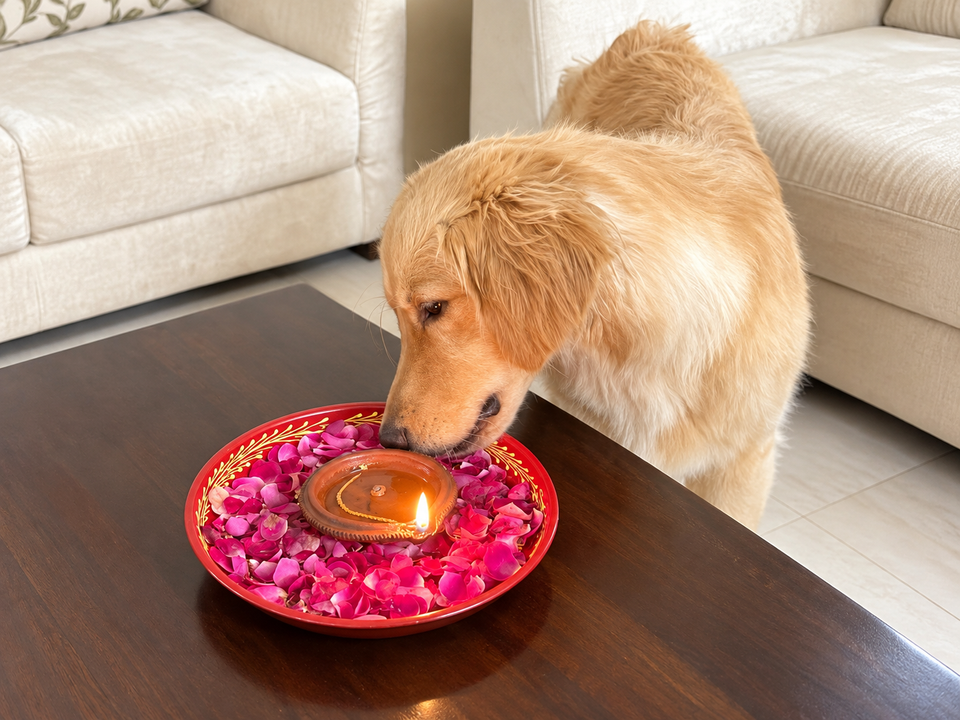
What to do if your dog has eaten raisins, grapes or tamarind
Call your vet straight away, even if your dog seems perfectly well. Do not wait for symptoms, because by the time a dog is vomiting, the window for the simplest treatment has often narrowed. Please do not try to make your dog vomit at home unless a vet specifically tells you to, since this can be unsafe in some situations. If you can, note roughly how much he ate, how big he is, and when it happened, and bring the packet or a photo of the dish.
Treatment is usually most effective when it starts early. It commonly involves clearing the stomach under veterinary supervision and then supporting the kidneys with fluids, along with blood tests to see how the kidneys are coping. Dogs who are treated promptly often do well, and that is exactly why a quick phone call matters more than certainty about how many raisins were eaten.
What about cats?
Cats are less commonly affected, and the Merck entry mentions that reports in cats and ferrets are anecdotal. This does not mean raisins are safe for cats. It means the evidence is thin, so the sensible approach is the same as for dogs: keep them away, and call your vet if a cat has eaten some.
Diwali habits that keep everyone safe
A few small habits go a long way in a crowded festive house. Keep a clearly marked bowl of dog-safe treats, so that guests who want to share something have a proper option. Put sweets, dry fruit boxes and leftover plates on high surfaces or inside closed cupboards rather than on coffee tables. Make sure whoever clears the plates knows not to scrape leftovers into the dog's bowl, since scraps from a festive table are often the source of a raisin or two. And save your clinic's number in your phone before the festivities begin, since an emergency at ten at night during Diwali is the worst time to be searching for it.
The TruVet takeaway
Raisins, grapes and very probably tamarind can injure a dog's kidneys, even in small amounts, and the exact reason is still being worked out. That uncertainty is a reason for caution and not a reason to relax. Keep festive food out of reach, tell your guests the rules, and call a vet the same day if your dog has eaten any of it, even if he looks fine.
TruVet Pet Care Clinic is at Shop No 4-6, opposite Bestech Park View Altura, Sector 79, Naurangpur, Gurugram, Haryana 122051. Dr. Brajmadhuri personally examines every patient, and we are open all seven days from 10am to 8pm for OPD consultation, vaccination, deworming, surgery, and health checkups for dogs and cats. If your dog has eaten raisins or tamarind this Diwali, WhatsApp us at +91 98710 10355 and we will advise you on what to do next.
Frequently asked questions.
My dog ate only two or three raisins and seems completely fine. Do I still need to call?
Yes, it is still worth a call. Dogs differ widely in how they react, and a dog who looks well in the first few hours can still go on to have kidney trouble, so your vet should decide whether he needs treatment.
How soon do signs appear after a dog eats raisins or grapes?
According to the Merck Veterinary Manual, vomiting commonly starts within about six to twelve hours, and kidney damage tends to become evident over the next one to three days. This is exactly why waiting for symptoms is not a good plan.
Is a raisin baked into a cake or cooked into kheer still dangerous?
We should assume so. There is no good evidence that cooking makes the problem go away, so treat dishes that contain raisins as risky for your dog.
Is tamarind really as risky as grapes?
Tamarind is included in the same warning because it also contains tartaric acid, and a published case series linked it to kidney injury in dogs. The evidence is much smaller than for grapes and raisins, which is why we say it is a possible risk worth taking seriously and not a certainty.
Should I make my dog vomit at home after he eats raisins?
No, not unless a vet specifically instructs you to. Inducing vomiting without guidance can be unsafe in some situations, so please call us first.
Are there safe sweet treats I can offer my dog during Diwali instead?
Plain cooked pumpkin, small pieces of apple without seeds, or a few of his usual treats are far safer than anything from the festive table. Ask us if you want ideas for your dog's size and diet.
Questions for Dr. Brajmadhuri?
Open all 7 days, 10am to 8pm. Walk-in OPD welcome.