 TruVet Pet Care Clinic
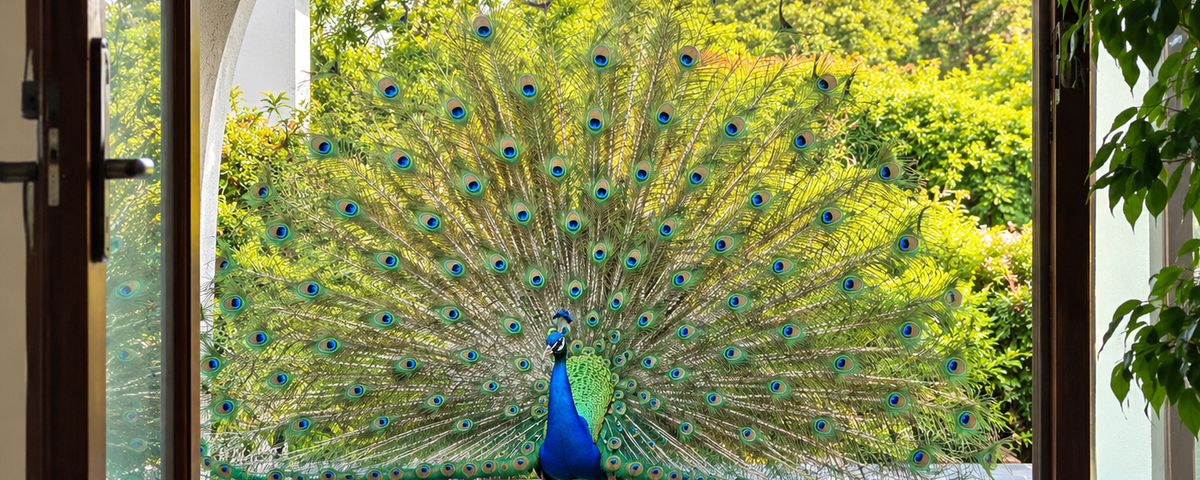
A peacock showing up in a Gurugram society garden is more common than most residents expect, and it comes with real legal protections most people are not aware of. Here's what the law actually says, and what to do if one visits yours.
Peacocks in Indian Neighbourhoods: Legal Status and What to Do If One Visits Your Society
By Dr. Brajmadhuri, TruVet Pet Care Clinic, Sector 79, Gurgaon
A peacock showing up in a Gurugram society garden is more common than most residents expect, and it comes with real legal protections most people are not aware of. Here is what the law actually says, and what to do if one visits yours.
It happens more often than most new Gurugram residents expect, especially in societies bordering open land or greenery. A peacock, sometimes trailing a full display of tail feathers, wanders through a garden or perches on a boundary wall, and residents are often left unsure whether to be delighted, concerned, or unsure what they are actually allowed to do about it. The short answer is that peacocks come with some of the strongest legal protections given to any animal in India, and knowing this before an encounter genuinely helps.
Why the peacock holds such a special legal status
The Indian peafowl has been India's national bird since 1963, and it carries protection under Schedule I of the Wild Life Protection Act, 1972_Act,_1972), the highest tier of protection available under Indian law, the same category that covers animals like the tiger and the elephant. This is not a symbolic protection only. It carries genuine legal weight and real consequences for anyone who harms, captures, or harasses one.
What this protection actually means in practice
Under this protection, no person may hunt, kill, capture, trap, or trade a peacock or its body parts. Naturally shed feathers, the kind a peacock drops on its own during moulting, are the one specific exception and can be legally collected. Violating these protections is a genuine criminal offence under the Wildlife Protection Act, carrying real penalties including potential imprisonment and fines, not simply a civil or administrative matter.
Why peacocks show up in urban societies at all
Peafowl are genuinely adaptable birds, and they are commonly found around human settlements, park edges, and village outskirts, not exclusively in dense forest. A Gurugram society bordering open land, agricultural fields, or forest patches is exactly the kind of environment a peacock may wander into, particularly as urban development continues to expand into what was previously more open terrain around the city.
Understanding peacock behaviour, especially during monsoon
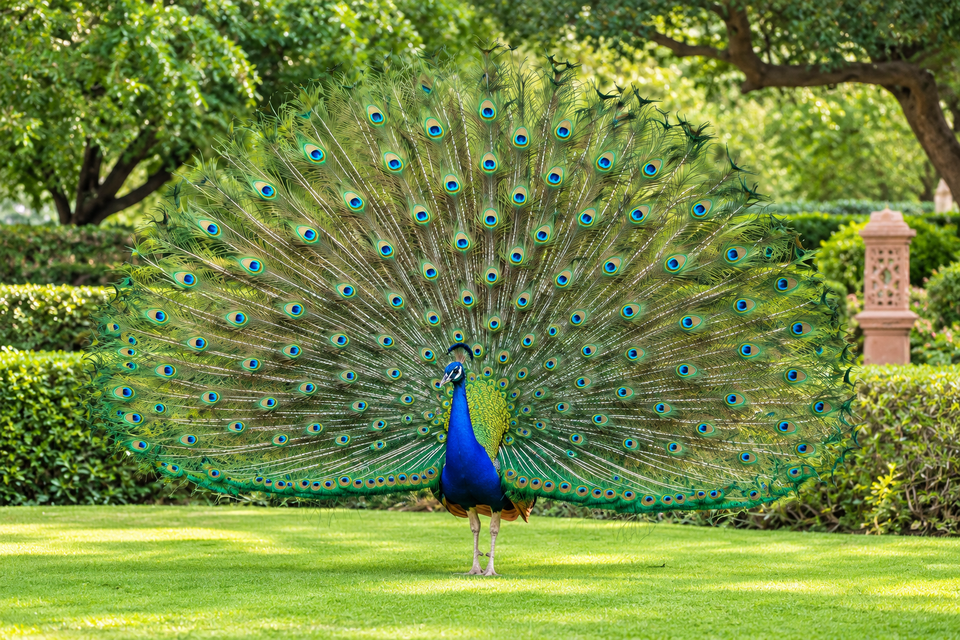
Peacock breeding season generally coincides with the monsoon, roughly May through October, and this is when their behaviour becomes most noticeable to residents. Males become considerably more vocal during this period, and their calls are loud, sharp, and carry over a genuinely long distance, which is often the first sign residents notice even before spotting the bird itself. The famous image of a peacock dancing in the rain is actually a mating display aimed at attracting a female, not, as folklore sometimes suggests, any kind of weather prediction.
After the breeding season winds down, typically between July and October depending on the specific timing that year, males moult and shed their long, elaborate tail feathers, which then regrow before the following season. This is a completely natural cycle and not a sign of illness or distress in the bird.
What to actually do if a peacock visits your society
Do not attempt to catch, chase, harm, or forcibly remove a peacock under any circumstances, since this would constitute a genuine offence under the Wildlife Protection Act, regardless of good intentions. If a peacock is causing a specific, ongoing problem, damaging garden plants, for example, or simply causing enough disruption that residents want guidance, the appropriate step is contacting your local State Forest Department, who are equipped to assess the situation and handle it appropriately, including relocation if genuinely necessary.
For most encounters, simple, non harmful deterrence is enough. Securing food waste and compost areas reduces what draws peafowl and other wildlife into a residential area in the first place, and protecting specific garden plants with simple barriers is a reasonable, harmless way to manage minor damage without needing to involve the bird itself at all.
Why this matters for a genuinely peaceful coexistence
A peacock in your society is not an emergency, a nuisance requiring aggressive removal, or an animal that needs rescuing under normal circumstances. It is a fully protected, legally significant species that happens to be sharing space with the humans who have built into its historic range. Treating an encounter calmly, informing other residents of the bird's protected status if needed, and reaching out to the Forest Department for anything beyond simple observation is genuinely the correct and legal approach.
The TruVet takeaway
A peacock wandering through your Gurugram society is a fairly ordinary occurrence given the city's blend of new development and older open land, and it comes with genuine legal protection that residents are often unaware of. The right response is almost always to simply observe, avoid any attempt to catch or harm the bird, and involve the Forest Department only if there is a genuine, ongoing problem that needs professional handling.
TruVet Pet Care Clinic is at Shop No 4-6, opposite Bestech Park View Altura, Sector 79, Naurangpur, Gurugram, Haryana 122051. Dr. Brajmadhuri personally examines every patient, and we are open all seven days from 10am to 8pm for OPD consultation, vaccination, deworming, surgery, and health checkups for dogs and cats. WhatsApp us at +91 98710 10355 if you have questions about wildlife encounters affecting your own pets.
Frequently asked questions.
Is it illegal to keep a peacock feather I found on the ground?
No, naturally shed feathers are specifically exempted from the protections covering the bird itself, so collecting a feather a peacock has already dropped is legal.
Can a housing society hire someone to remove a peacock that keeps returning?
Not independently. Any removal or relocation needs to go through the State Forest Department, since unauthorised capture or removal of a Schedule I protected species is a genuine offence regardless of who carries it out.
Why is the peacock so loud during monsoon specifically?
This coincides with breeding season, when males call frequently and loudly as part of courtship display, which is why the noise becomes particularly noticeable during the rainy months.
Is it safe for my dog or cat to be around a peacock in the garden?
Generally peacocks and pets can coexist without direct conflict, though it is sensible to supervise interactions, since a peacock may act defensively if it feels cornered or threatened, and a curious pet could provoke that response unintentionally.
My society wants to plant deterrents to keep peacocks away entirely. Is that legal?
Non harmful measures like securing food waste or protecting specific plants are reasonable and legal. Anything involving trapping, harming, or aggressively driving the bird away would not be, given its protected status.
Do peacocks carry any disease risk to household pets?
There is no specific, well documented disease risk from ordinary peacock presence in a society setting, though general hygiene around any wild bird droppings is a sensible precaution regardless of species.
Questions for Dr. Brajmadhuri?
Open all 7 days, 10am to 8pm. Walk-in OPD welcome.