 TruVet Pet Care Clinic
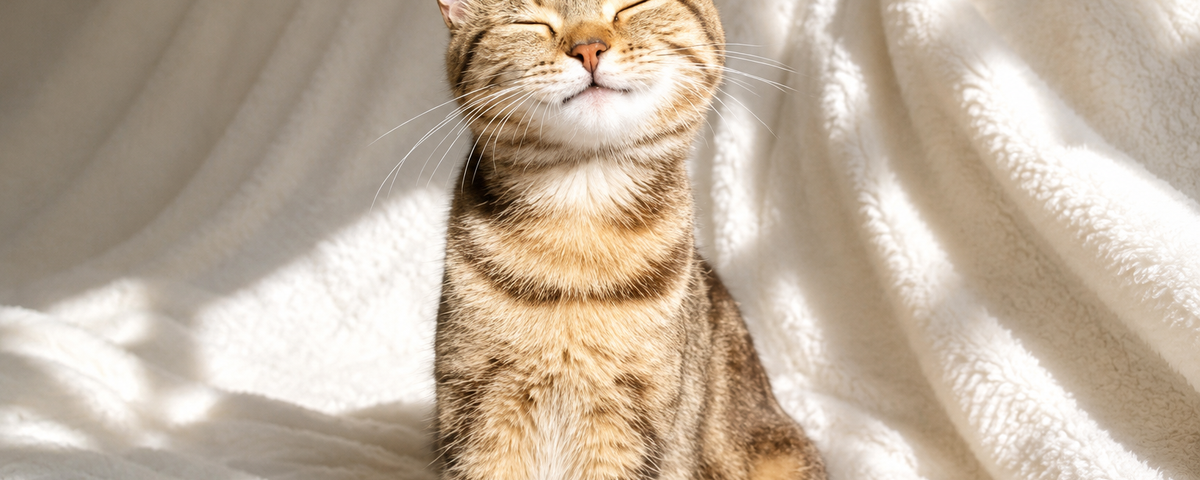
Small black spots suddenly appearing on your cat's lips, nose, or gums can look alarming, but in most cases they are a completely harmless condition called lentigo. Here's what it actually is, and the small number of signs that genuinely deserve a closer look.
Those Black Spots on Your Cat's Lips and Gums: What Is Feline Lentigo
By Dr. Brajmadhuri, TruVet Pet Care Clinic, Sector 79, Gurgaon
We see this fairly often in practice, an owner brings their cat in, understandably worried, having just noticed small black or dark brown spots on her lips, gums, nose, or eyelids that were not there before. It is a genuinely common moment of concern, and in the vast majority of cases, the reassuring answer is the same, this is lentigo, a harmless, cosmetic condition rather than anything to worry about.
What lentigo actually is
Lentigo is essentially the feline equivalent of human freckles. It happens when melanocytes, the cells responsible for producing pigment, increase in a particular area of skin or mucous membrane, creating small, flat, dark spots with a clearly defined border. These spots typically start small and can gradually increase in size and number over time, sometimes merging into larger patches of pigmentation as a cat ages.
Where it usually shows up
Lentigo most commonly appears on the lips, gums, nose, and eyelids, though it can occasionally show up in less visible spots too, including the roof of the mouth, inside the ears, or even on the paw pads. It typically begins appearing around one year of age, though it is more commonly noticed in middle aged and older cats, and the spots tend to become more numerous and noticeable as a cat continues to age.
Why some cats get it and others do not
This is genuinely linked to genetics rather than anything an owner did or did not do. Lentigo is particularly common in cats with orange colouring, which includes ginger cats, but also calico, tortoiseshell, and flame point cats, all of which share the same genetic trait responsible for orange pigmentation in their coat. It is less common, but has also been observed, in cats with silver or cream coats. Unlike human freckles, lentigo in cats is not caused or worsened by sun exposure, despite the visual similarity making that a reasonable first guess.
Why it looks alarming even though it usually is not
Understandably, a sudden dark spot inside a cat's mouth or on her lips can look concerning, and it is completely reasonable for an owner to want it checked rather than simply assuming it is harmless. The spots themselves are painless and do not cause any itching, discomfort, or behavioural change, and the skin or tissue surrounding them remains entirely normal in texture and appearance. Most vets can identify lentigo simply by examining it directly, without needing further testing, precisely because its appearance is so consistent and distinctive.
The signs that genuinely deserve a closer look
While lentigo itself is harmless, it is worth knowing the handful of signs that suggest something else might be going on, since a small number of more serious conditions can occasionally resemble it at first glance:
- A spot that is raised, bumpy, or thickened rather than completely flat
- Bleeding, ulceration, or an open sore associated with the spot
- Rapid growth or a sudden, significant change in size, shape, or colour
- Discharge, swelling, or an unpleasant odour near the affected area
- Signs of discomfort, including drooling, pawing at the mouth, reduced appetite, or reluctance to eat
Any of these features should prompt a proper veterinary evaluation, since they point away from ordinary lentigo and toward something that genuinely needs a closer look, occasionally including a small biopsy to confirm what is actually happening.
How this differs from feline acne
It is worth mentioning a commonly confused, entirely separate condition here too, since owners sometimes describe one while meaning the other. Feline acne typically appears as small, dark, gritty looking spots concentrated specifically on the chin, often resembling dirt that will not wash off, and it is caused by blocked hair follicles and oil glands rather than pigment cells. Unlike lentigo, feline acne can sometimes cause mild irritation and generally responds well to simple, regular cleaning of the chin area. The two conditions are easy to tell apart once you know what each looks like, but they are commonly mixed up by owners noticing dark spots for the first time.
What we actually recommend
For the great majority of cats with typical lentigo, no treatment is necessary at all, since it is a purely cosmetic change that causes no harm. What we do recommend is a simple visual check during routine visits, comparing how the spots look over time, along with an owner mentioning promptly if a spot changes rapidly, becomes raised, or shows any sign of irritation. This gives us an easy way to keep an eye on things without treating a harmless condition as though it were a medical emergency.
The TruVet takeaway
Small black spots appearing on your cat's lips, gums, nose, or eyelids, particularly if she has orange, calico, or tortoiseshell colouring, are overwhelmingly likely to be lentigo, a harmless, genetic, purely cosmetic condition that needs no treatment at all. The reassuring news is that this is one of the more common things we see brought in out of concern, and one of the easiest to put an owner's mind at ease about. That said, any spot that becomes raised, bleeds, grows rapidly, or comes with signs of discomfort is always worth a proper look, simply to rule out something else.
TruVet Pet Care Clinic is located at Shop No 4-6, opposite Bestech Park View Altura, Sector 79, Naurangpur, Gurugram, Haryana 122051. Dr. Brajmadhuri personally examines every patient, and we are open all seven days from 10am to 8pm for OPD consultation, vaccination, deworming, surgery, and health checkups for dogs and cats. WhatsApp us at +91 98710 10355 if you have noticed new spots on your cat and would like them checked.
Frequently asked questions.
My cat is not orange, but she has these spots. Is that unusual?
It is less common but not unheard of, since lentigo has occasionally been reported in cats with silver or cream coats too. The underlying cause is still considered genetic rather than anything to be concerned about.
Can lentigo spread or get worse over time?
The number and size of spots can genuinely increase as a cat ages, which is a normal part of the condition rather than a sign of it worsening in any harmful sense.
Does lentigo ever turn into cancer?
No, lentigo itself does not develop into cancer. That said, a cat with lentigo can still separately develop an unrelated skin tumour later in life, which is part of why any new, unusual, or changing spot is still worth having checked rather than assumed to be lentigo automatically.
My cat's spot looks raised and slightly different from her others. Should I worry?
Yes, this is genuinely worth a veterinary check, since typical lentigo spots stay flat, and a raised or differently textured spot could indicate something else that needs a closer look.
Is there anything I can do to prevent lentigo?
No, since it is a genetic trait rather than something caused by diet, environment, or sun exposure, there is nothing to prevent or treat, and it is simply a harmless part of some cats' natural pigmentation pattern.
How can I tell the difference between lentigo and feline acne at home?
Location is the easiest clue, lentigo typically appears on the lips, gums, nose, and eyelids, while feline acne concentrates specifically on the chin and often looks like small, gritty dark specks rather than smooth, flat spots.
Questions for Dr. Brajmadhuri?
Open all 7 days, 10am to 8pm. Walk-in OPD welcome.