 TruVet Pet Care Clinic
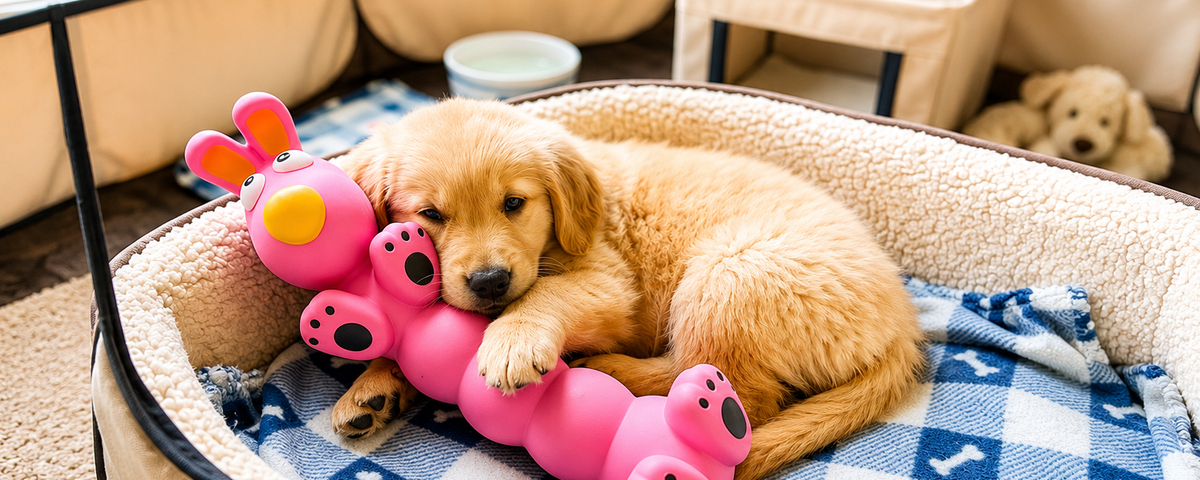
Your dog is nesting, her nipples have swollen, and she may even be producing milk, but there are no puppies on the way. This is a genuine, common condition, and understanding it properly changes how you should respond.
Phantom Puppies: Understanding False Pregnancy in Your Unspayed Dog
By Dr. Brajmadhuri, TruVet Pet Care Clinic, Sector 79, Gurgaon
Your dog is nesting, her nipples have swollen, and she may even be producing milk, but there are no puppies on the way. This is a genuine, common condition, and understanding it properly changes how you should respond.
It is a genuinely confusing moment for a lot of owners. An unspayed female dog who was definitely not mated suddenly starts behaving exactly as though she is expecting puppies, nesting in a quiet corner, mothering toys or small objects as though they were newborns, and sometimes even developing swollen mammary glands with actual milk production. This is a real, well-recognised condition called false pregnancy, and it is considerably more common than most owners realise.
What is actually happening in her body
Every unspayed female dog goes through the same basic hormonal sequence after her heat cycle, regardless of whether she was actually mated. After ovulation, hormone levels rise in a pattern that prepares her body for a potential pregnancy. If she is not actually pregnant, these hormone levels eventually decline, and it is specifically this decline, a drop in progesterone alongside a corresponding rise in another hormone called prolactin, that triggers the physical and behavioural signs of false pregnancy. Essentially, her body is responding to the same hormonal shift it would experience during a real pregnancy's later stages, even though no puppies are actually developing.
This typically develops somewhere between four and nine weeks after her heat cycle, roughly the same general timeframe a genuine pregnancy would be approaching its end, which is part of why the resulting behaviour looks so convincingly like real, late stage pregnancy and impending motherhood.
Just how common this actually is
This is worth knowing clearly, since it changes how alarming the situation should feel. Every intact female dog undergoes the same hormonal changes after each heat cycle, whether or not she was mated, which means the potential for false pregnancy exists in essentially all unspayed female dogs. One frequently cited figure suggests that a large majority of intact female dogs, well over three quarters, show clear signs of false pregnancy at least twice over their lifetime while remaining unspayed. This is genuinely closer to a normal physiological variation than a rare or unusual medical event.
The signs to recognise
The presentation can vary from mild to quite convincing. Nesting behaviour, seeking out and rearranging a quiet, secluded spot, is common and often one of the earliest signs. Mothering behaviour directed at toys, shoes, or other small objects, treated almost like puppies, frequently follows. Physical signs can include swollen mammary glands, sometimes with visible milk production, along with abdominal enlargement, restlessness, reduced appetite, and occasional mild aggression or unusual protectiveness, particularly around whatever object she has adopted as a stand-in puppy.
Why it is still worth a vet visit
Even though false pregnancy is a normal hormonal event rather than a disease, it is genuinely worth having your dog examined rather than assuming at home that this is definitely what is happening. The physical signs of false pregnancy closely mimic real pregnancy, which means a proper exam is the only reliable way to distinguish between the two if there was ever any possibility of actual mating. A vet visit also helps rule out other conditions that can produce somewhat similar symptoms, including a serious uterine infection called pyometra, which needs prompt, different treatment and should never be assumed to be simply a false pregnancy without a proper check.
What treatment actually looks like
For most dogs, mild false pregnancy resolves on its own within roughly two to three weeks without any specific treatment at all. If your dog seems physically uncomfortable or genuinely distressed, supportive treatment can help, including medication to reduce milk production and ease any associated fluid retention, or mild sedation in more severe cases involving significant anxiety or restlessness. One thing genuinely worth avoiding is touching, massaging, or attempting to express her mammary glands, since this actually stimulates further milk production rather than helping resolve the situation, extending rather than shortening the episode.
If a dog experiences repeated, significant episodes of false pregnancy across multiple heat cycles, this becomes a stronger reason to discuss spaying, since it permanently removes the hormonal cycle responsible for triggering the condition in the first place. It is worth noting that spaying performed while a dog is already in the hormonal phase associated with false pregnancy can sometimes prompt or briefly extend symptoms, so timing this procedure appropriately, generally once symptoms have settled, is something we would guide you through directly.
What this means for your dog's long term health
Beyond the immediate discomfort a false pregnancy episode can cause, dogs who experience repeated episodes over many heat cycles may face a somewhat increased risk of certain reproductive health issues over time, which is one more factor worth weighing into the broader conversation about spaying, alongside the more commonly discussed benefits around preventing unwanted litters and reducing certain cancer risks.
The TruVet takeaway
False pregnancy is a genuine, common, and normal hormonal event in unspayed female dogs, not a sign that something has gone wrong, and most cases resolve on their own within a few weeks without any specific treatment. That said, a vet visit is still worthwhile to properly rule out a real pregnancy or another condition like pyometra, and if the pattern repeats across multiple cycles, it is a reasonable moment to have an honest conversation about spaying.
TruVet Pet Care Clinic is located at Shop No 4-6, opposite Bestech Park View Altura, Sector 79, Naurangpur, Gurugram, Haryana 122051. Dr. Brajmadhuri personally handles every consultation, and we are open all seven days from 10am to 8pm for OPD consultation, vaccination, deworming, surgery, and health checkups for dogs and cats. WhatsApp us at +91 98710 10355 if your dog is showing signs of false pregnancy.
Frequently asked questions.
How can I tell if my dog is truly pregnant or just having a false pregnancy?
Only a proper veterinary exam can reliably distinguish the two, particularly since the physical signs can look remarkably similar. If there was any possibility of mating, a vet visit for an ultrasound or physical exam is the only way to know for certain.
Is it safe to just wait it out at home without seeing a vet?
For clearly mild cases, many dogs do recover without treatment, but a vet visit is still worthwhile to rule out a real pregnancy or a more serious condition like pyometra that can present with somewhat similar early signs.
Will spaying my dog stop false pregnancies from happening again?
Yes, since spaying removes the hormonal cycle responsible for triggering the condition in the first place, though timing the procedure appropriately relative to an active episode matters and is something we can guide you through.
Is it harmful if my dog mothers a toy or object during a false pregnancy?
Generally no, this is a normal behavioural expression of the hormonal changes she is experiencing and is not harmful on its own, though it is worth monitoring if it comes with significant distress or unusual protectiveness.
Can false pregnancy happen after just one heat cycle, or does it take several?
It can happen after any single heat cycle, and does not require a pattern of previous episodes to occur, since the underlying hormonal shift happens after essentially every cycle in an intact female.
Should I never touch my dog's swollen nipples during this time?
Correct, avoid massaging or handling the area, since this can stimulate further milk production and potentially prolong the episode rather than helping it resolve.
Questions for Dr. Brajmadhuri?
Open all 7 days, 10am to 8pm. Walk-in OPD welcome.