 TruVet Pet Care Clinic
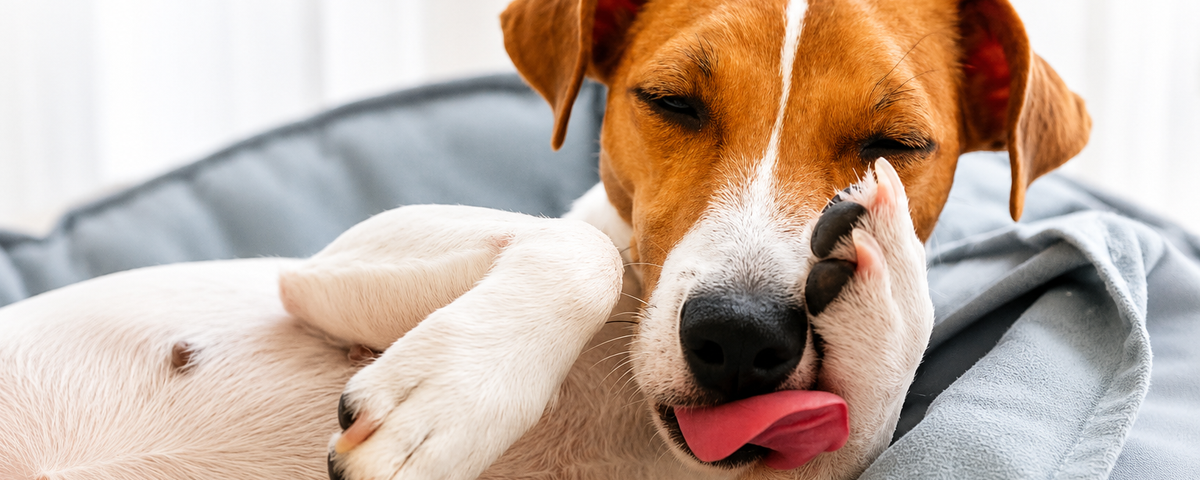
A dog licking one spot on his leg over and over looks like a harmless habit, until it becomes a genuine wound. Here's how ordinary licking turns into a real skin condition, and why catching it early matters so much.
Could Your Dog's Own Licking Be Triggering Skin Problems?
By Dr. Brajmadhuri, TruVet Pet Care Clinic, Sector 79, Gurgaon
A dog licking one spot on his leg over and over looks like a harmless habit, until it becomes a genuine wound. Here is how ordinary licking turns into a real skin condition, and why catching it early matters so much.
It usually starts small enough that owners barely notice. A dog licks at one particular spot on his paw or leg a little more than usual, and it seems like nothing more than a passing itch or a habit. Left unaddressed, that same small habit can turn into a genuinely serious skin condition, one that becomes considerably harder to treat the longer it continues.
How ordinary licking turns into a real problem
The mechanism behind this is what veterinary behaviourists and dermatologists call the itch-lick cycle. It typically starts with something that makes a specific spot itchy or uncomfortable, most often an allergy, though pain, irritation, or anxiety can all trigger it too. The dog licks the itchy area for relief, but the licking itself irritates the skin further, causing mild inflammation that itself becomes itchy. The dog licks again, and again, and a cycle builds that becomes self sustaining, continuing long after whatever originally triggered it has settled down.
What this condition actually looks like
When this cycle continues long enough, it produces a specific, recognisable skin lesion called a lick granuloma, also known by its clinical name, acral lick dermatitis. It typically appears on the lower legs, most commonly on the front of the wrist joint or around the ankle, as a well defined patch that starts wet looking with some redness and hair loss. Left unaddressed, it can progress into something more serious, a thickened, sometimes ulcerated area with visible scarring, occasionally oozing or developing a noticeable odour if a secondary infection sets in.
Why licking releases something that feels good to a dog
Part of what makes this cycle so hard to break on its own is that licking is not purely a response to discomfort. Repetitive licking appears to trigger the release of endorphins, the body's natural feel good chemicals, which genuinely soothes a dog in the moment, even as it damages the skin underneath. This is part of why some dogs continue licking a spot well beyond what the original itch or irritation would explain, since the behaviour itself has become partly self reinforcing.
What actually causes the underlying itch or irritation
Allergies are the single most common underlying trigger, whether environmental, like pollen or dust, or food related. Joint pain from arthritis in an older dog can also cause licking directed at the area over a sore joint, since the dog is responding to discomfort rather than a skin issue specifically. Skin infections, whether bacterial or fungal, and external parasites like mites can all cause the kind of itching that starts the cycle. And in some dogs, particularly those left alone for long periods or dealing with genuine anxiety, licking becomes a behavioural response to stress or boredom rather than a physical trigger at all, sometimes described as a compulsive behaviour.
Why it matters to catch this early
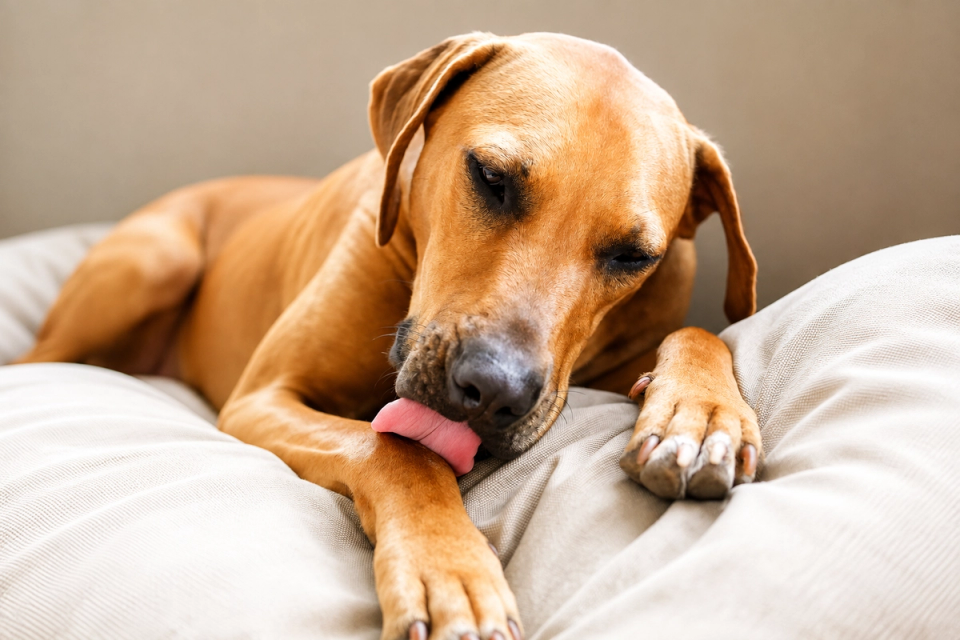
A lick granuloma is genuinely one of the more frustrating conditions to treat once it becomes established, since simply healing the skin does not address whatever is still driving the dog to lick. Treatment that only targets the wound, without identifying and addressing the underlying cause, tends to see the same spot recur again and again. This is exactly why a proper veterinary evaluation matters here, since diagnosing the actual trigger, whether that is an allergy, a joint issue, or a genuine behavioural component, is what actually breaks the cycle rather than just treating the visible symptom.
What a proper evaluation usually involves
Depending on what your vet suspects, this can include a physical exam, skin scrapings to check for mites, an assessment for signs of infection, and in some cases allergy testing or a food trial to identify a dietary trigger. If arthritis or joint pain seems likely, particularly in an older dog, that joint may need its own separate evaluation. And if a genuine behavioural or anxiety component seems to be involved, addressing the dog's environment, routine, and stress levels becomes just as important as any topical treatment for the skin itself.
What you can do in the meantime
If you notice your dog focusing on one particular spot more than usual, do not wait to see if it resolves on its own, since this is exactly the kind of habit that tends to worsen rather than improve without intervention. Preventing continued access to the area, sometimes with a protective cone or wrap in the short term, alongside keeping the area clean, can help limit further damage while you work with your vet to identify what is actually driving the behaviour underneath.
The TruVet takeaway
A dog licking one spot repeatedly is never really "just a habit" worth ignoring, since it reflects a genuine underlying trigger, whether that is an allergy, joint pain, infection, or anxiety, and the licking itself can quickly become part of the problem rather than simply a symptom of it. Catching this early, before it progresses into a full lick granuloma, makes treatment considerably simpler and spares your dog weeks or months of a frustrating, self perpetuating cycle.
TruVet Pet Care Clinic is at Shop No 4-6, opposite Bestech Park View Altura, Sector 79, Naurangpur, Gurugram, Haryana 122051. Dr. Brajmadhuri personally examines every patient, and we are open all seven days from 10am to 8pm for OPD consultation, vaccination, deworming, surgery, and health checkups for dogs and cats. WhatsApp us at +91 98710 10355 if your dog has developed a spot he keeps licking.
Frequently asked questions.
My dog licks his paws a lot but there is no visible wound yet. Should I still be concerned?
It is worth mentioning at a checkup, since catching the itch-lick cycle before a lick granuloma actually forms is considerably easier to treat than addressing an established wound later.
How is a lick granuloma different from a hot spot?
A hot spot tends to appear suddenly, often overnight, and looks flat, hairless, and intensely inflamed. A lick granuloma develops more gradually through chronic licking and tends to become thickened and raised over time rather than appearing all at once.
Can stress or boredom really cause a physical skin condition like this?
Yes, in some dogs, particularly those left alone for long periods, licking becomes a compulsive, stress related behaviour that can produce the exact same kind of skin damage as one triggered by an allergy or physical irritation.
Will a cone or bandage alone fix the problem?
It can prevent further damage in the short term, but it does not address whatever is actually driving the licking, which means the behaviour and the wound are both likely to return once the barrier is removed unless the underlying cause is identified and treated.
Are certain breeds more prone to lick granulomas?
Yes, this condition is seen more often in middle aged to older, large breed dogs, including Labradors, Golden Retrievers, Great Danes, and Dobermans, among others, though any dog can develop one.
How long does it typically take to resolve once treatment starts?
This varies considerably depending on the underlying cause and how established the lesion already is, but chronic lick granulomas can take weeks to months of consistent treatment to fully resolve, which is exactly why early intervention matters so much.
Questions for Dr. Brajmadhuri?
Open all 7 days, 10am to 8pm. Walk-in OPD welcome.