 TruVet Pet Care Clinic
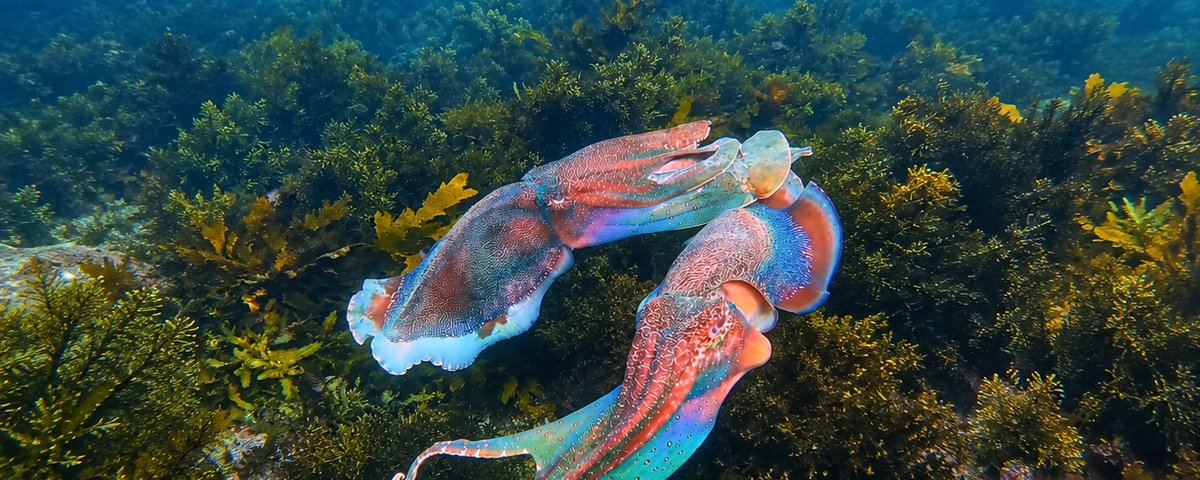
An octopus can vanish against a coral reef faster than you can blink, using a brain wired to millions of individual pigment cells. The genuinely strange twist is that the animal pulling off this trick cannot actually see colour at all.
Masters of Disguise: How Cuttlefish and Octopuses Change Colour in Milliseconds
By Dr. Brajmadhuri, TruVet Pet Care Clinic, Sector 79, Gurgaon
Few abilities in the entire animal kingdom sound more like fiction than genuine fact. An octopus resting on a patch of coral reef can shift its skin colour, brightness, and even physical texture to nearly vanish against its surroundings in a fraction of a second, faster than the blink of a human eye. The biological mechanism behind this is every bit as remarkable as the visual effect itself, and it comes with one genuinely strange twist that makes the whole thing even harder to believe.
Just how fast this actually happens
Octopuses, cuttlefish, and squid, collectively known as cephalopods, can change their skin's colour, brightness, contrast, and pattern in as little as two hundred milliseconds, roughly one fifth of a second, matching the speed of a human eyeblink. This is, without real competition, the fastest form of adaptive colour change found anywhere in the animal kingdom, considerably faster than the more familiar, comparatively slow colour shifting seen in animals like chameleons.
The cellular machinery making this possible
This ability comes down to specialised skin cells called chromatophores, small, elastic sacs filled with pigment, each individually connected to a nerve fibre running directly from the brain. When the brain sends a signal, tiny muscles surrounding a chromatophore contract, stretching the pigment sac open into a visible, flattened disc that can expand many times its original resting size. When the signal stops, the muscles relax and the sac snaps back down to a barely visible pinprick, and the associated colour effectively disappears from view.
Because each individual chromatophore is under direct, independent neural control rather than relying on a slower hormonal signal the way many other colour changing animals do, an octopus can coordinate an extraordinary number of these cells simultaneously. A single octopus manages somewhere in the range of ten to twenty million chromatophore organs across its skin, along with additional layers of reflective cells, adjusting all of it together to match the specific colour, brightness, and pattern of whatever surface it happens to be resting against.
It is not just about colour, texture changes too
Cephalopod camouflage goes beyond colour matching alone. These animals can also physically alter the three dimensional texture of their own skin, raising small, muscular bumps called papillae to mimic the rough texture of coral or rock, then flattening them again just as quickly when moving to a smoother surface. Like the chromatophores themselves, these papillae are directly controlled by motor neurons from the brain, allowing an octopus or cuttlefish to shift from smooth to genuinely spiky in well under a second.
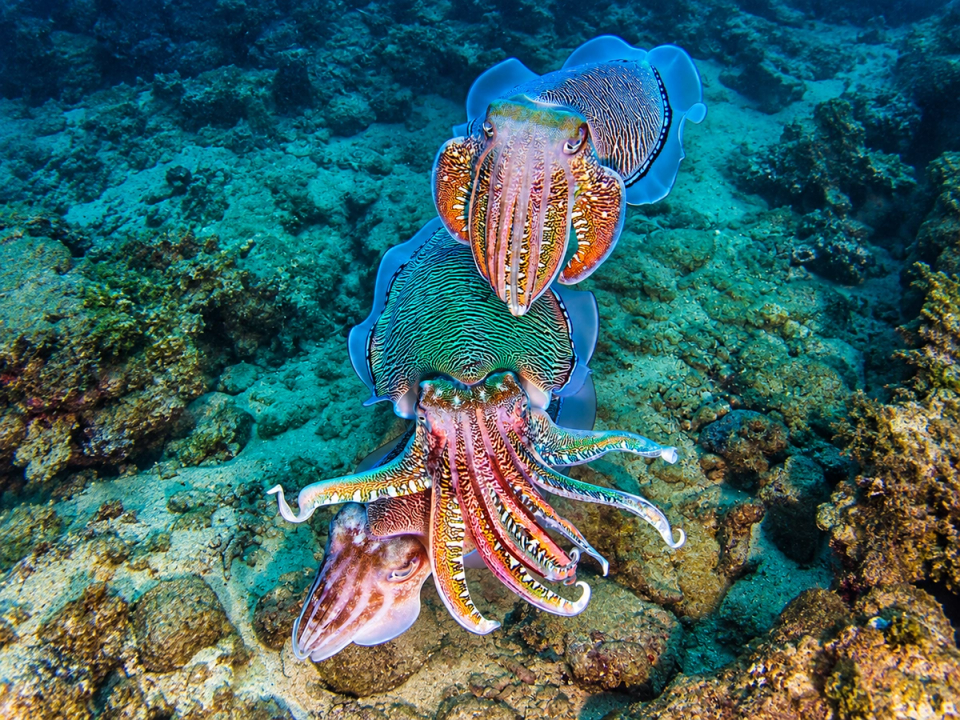
The genuinely strange twist, an animal that cannot see the colours it produces
This is the detail that makes the whole ability considerably harder to accept at face value. With the exception of one unusual species, cephalopods possess only a single type of light sensing visual pigment in their eyes, which means that by the standard biological definition, they are functionally colourblind. And yet these same animals reliably, convincingly match colours they cannot directly perceive through their own eyes.
Scientists do not yet have a fully settled explanation for how this is possible. Some researchers have proposed that cephalopods may be able to sense colour information through light sensitive proteins embedded directly in their skin, effectively allowing parts of the body itself to detect colour independently of the eyes. Others have suggested that the unusual, oddly shaped pupils found in many cephalopod species could allow them to detect colour indirectly, through a phenomenon involving how different wavelengths of light are focused differently as they pass through the eye. Neither explanation has been definitively confirmed, and precisely how a colourblind animal camouflages this convincingly remains a genuinely open, actively researched question.
Why this ability evolved in the first place
The evolutionary logic makes real sense once you consider what cephalopods are working with. Soft bodied, lacking any hard protective shell, and sitting fairly low on the food chain relative to the many predators sharing their marine environment, rapid, convincing camouflage offers a genuinely powerful survival advantage, both for avoiding being eaten and, separately, for approaching prey without being noticed. Some species also use rapid colour change for communication and signalling to other cephalopods, entirely separate from any camouflage purpose.
Why this kind of science genuinely matters beyond curiosity
Understanding exactly how cephalopod camouflage works at the cellular and neural level has genuinely influenced fields well beyond marine biology, including materials science and engineering, where researchers have drawn direct inspiration from this system while working on adaptive, colour changing synthetic materials. It is a good reminder that studying even a seemingly unrelated corner of the animal kingdom can produce genuinely useful, practical insight in entirely different fields.
The TruVet takeaway
The speed and precision of cephalopod camouflage, an octopus or cuttlefish vanishing against its surroundings in a fraction of a second, represents one of the most genuinely remarkable feats of biological engineering found anywhere in nature, achieved through millions of individually nerve controlled pigment cells working in close coordination. That an animal apparently unable to see colour at all can pull this off so convincingly remains one of the more delightfully unresolved mysteries in current animal science, and a genuine reminder of how much the natural world still has left to explain.
TruVet Pet Care Clinic is at Shop No 4-6, opposite Bestech Park View Altura, Sector 79, Naurangpur, Gurugram, Haryana 122051. Dr. Brajmadhuri personally examines every patient, and we are open all seven days from 10am to 8pm for OPD consultation, vaccination, deworming, surgery, and health checkups for dogs and cats. WhatsApp us at +91 98710 10355 for anything your own pet needs, camouflage abilities notwithstanding.
Frequently asked questions.
Are chameleons actually as fast at changing colour as octopuses and cuttlefish?
No, chameleons are considerably slower, and cephalopods hold a clear, well documented lead as the fastest colour changing animals known, changing in a fraction of a second compared to the more gradual process seen in reptiles like chameleons.
How can a colourblind animal possibly match colours it cannot see?
This remains a genuinely open scientific question. Leading hypotheses include the possibility of light sensitive proteins in the skin itself, or indirect colour detection through the eye's unusual pupil shape, but neither has been definitively confirmed as the full explanation.
Do all cephalopods have this camouflage ability, or just octopuses specifically?
Octopuses, cuttlefish, and squid all share this general chromatophore based camouflage system, though the specific patterns, speed, and sophistication can vary somewhat between species.
Can cephalopods camouflage while sleeping too?
Some research has observed colour changes occurring during sleep in certain species, which is thought to reflect underlying brain activity during different sleep states rather than active, deliberate camouflage in the moment.
Is this ability something scientists are trying to replicate in technology?
Yes, researchers in materials science have drawn direct inspiration from cephalopod camouflage mechanisms while developing adaptive, colour changing synthetic materials, an example of biological research informing engineering.
Why do octopuses camouflage even when there is no visible predator nearby?
Camouflage likely serves multiple purposes beyond immediate predator avoidance, including approaching prey undetected and, in some cases, communication or signalling to other cephalopods, which may explain color changes occurring outside an obvious threat context.
Questions for Dr. Brajmadhuri?
Open all 7 days, 10am to 8pm. Walk-in OPD welcome.