 TruVet Pet Care Clinic
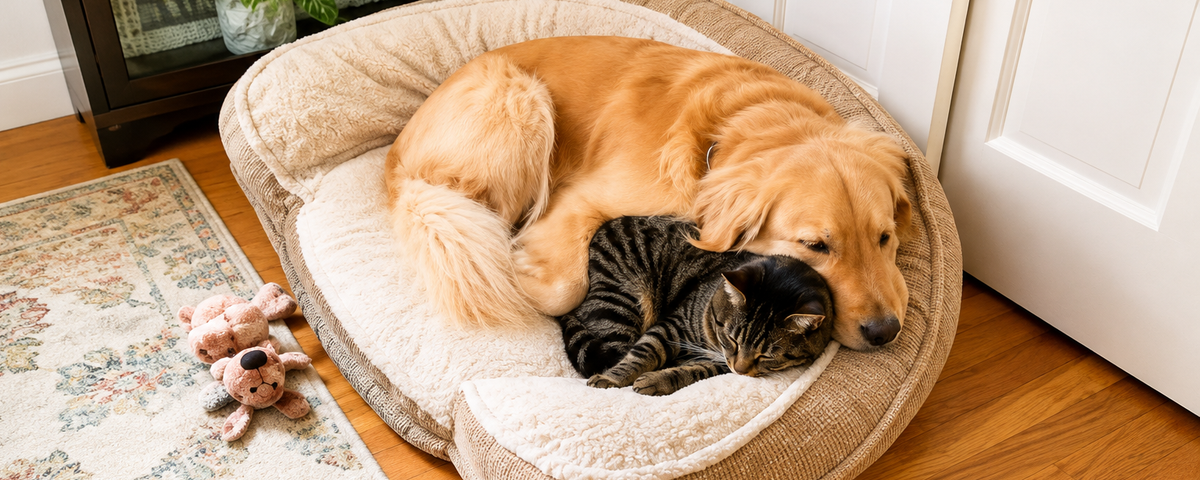
"Are you a cat person or a dog person" sounds like a throwaway icebreaker, but psychologists have actually studied it seriously, and the answer reveals something genuine about personality.
The Hidden Psychology Behind Why You're a Cat Person or a Dog Person
By Dr. Brajmadhuri, TruVet Pet Care Clinic, Sector 79, Gurgaon
It is one of those questions that comes up constantly in casual conversation, at parties, on dating profiles, in idle small talk, are you a cat person or a dog person. Most people answer instantly and confidently, often with a small laugh, as though the question barely deserves serious thought. What is genuinely interesting is that psychologists have actually studied this question properly, using validated personality assessments rather than casual assumption, and the results suggest there really is something meaningful behind the label.
The study that took this seriously
A well known piece of research from psychologists at the University of Texas at Austin surveyed thousands of people, asking each to identify as a dog person, a cat person, both, or neither, before completing a standard, scientifically validated personality assessment covering five major traits, extraversion, agreeableness, conscientiousness, neuroticism, and openness to experience. This framework, often called the Big Five, is one of the most widely used and well regarded models in personality psychology, which is part of why this particular study carries more weight than typical pop psychology content on the topic.
What the research actually found
The results lined up with popular stereotypes more closely than many people might expect. Self identified dog people scored meaningfully higher on extraversion, agreeableness, and conscientiousness compared to cat people. Self identified cat people, meanwhile, scored higher specifically on openness to experience and somewhat higher on neuroticism. In plain terms, dog people in this research tended to be more socially outgoing, more easygoing and cooperative, and more organised and dependable, while cat people tended to be more open to new ideas and experiences, along with being somewhat more prone to anxiety or emotional sensitivity.
Why this pattern might actually make sense
There is a reasonably intuitive explanation for why these traits line up with these particular pets. Dogs are highly social, routine oriented animals that thrive on regular interaction, structured walks, and consistent engagement, which suits someone who is naturally more extraverted and conscientious about maintaining a routine. Cats, by contrast, are more independent, more selectively social on their own terms, and more comfortable with a less structured, less constantly demanding relationship, which may appeal more naturally to someone higher in openness, someone drawn to a less conventional, more independent kind of companionship.
An interesting wrinkle in the findings
One particularly interesting detail from this line of research is that dog people, as a group, looked fairly similar in several traits to people who described themselves as neither a dog person nor a cat person, while cat people stood out as more genuinely distinctive across the board. Some psychologists studying this have suggested that identifying strongly as a dog person may almost be a kind of social default, given how broadly popular and normalised dog ownership is, while identifying strongly as a cat person may involve a more deliberate, individual preference that says comparatively more about a person's specific personality.
A note on what this research does not prove
It is worth being clear about the limits here, since this kind of research measures correlation, a genuine statistical pattern, not a strict rule about any individual person. Plenty of highly extraverted people are devoted cat lovers, and plenty of independent, open minded people are utterly devoted to their dogs. The findings describe a real average tendency across thousands of people, not a personality test that can predict any one individual's preferences with certainty. It is also worth noting that most of this research relies on self report, people describing their own personalities and their own pet preference, rather than fully independent, objective measurement, which is a limitation common to a great deal of personality psychology.
Why this is genuinely fun to think about anyway
Even with those limitations in mind, there is something worth sitting with in this pattern, since it reflects something plausible about the actual nature of the two animals themselves. It is not simply that dog people or cat people randomly ended up with their respective pets. There may be a genuine alignment between a person's underlying temperament and the kind of relationship each animal naturally offers, structured, socially engaged companionship from a dog, or a more independent, quieter, and in some ways more mysterious bond with a cat.
What if you consider yourself both, or neither
A meaningful portion of people in this kind of research identify as liking both cats and dogs equally, or neither particularly strongly, and this group tends to sit somewhere in between the more distinct dog person and cat person profiles on most personality measures. This lines up with a fairly intuitive idea, that personality exists on a spectrum rather than in strict, mutually exclusive categories, and pet preference likely reflects that same kind of gradual variation rather than a hard, binary split.
The TruVet takeaway
The playful question of cat person versus dog person turns out to have genuine psychological substance behind it, not as a rigid rule about any one individual, but as a real, statistically meaningful pattern across large groups of people. Dog people tend to be more extraverted, agreeable, and conscientious, while cat people tend to be more open to new experience and somewhat more prone to anxiety. Whichever camp you fall into, or if you happily belong to both, the underlying reason likely has less to do with random chance and more to do with which kind of companionship genuinely suits who you are.
TruVet Pet Care Clinic is at Shop No 4-6, opposite Bestech Park View Altura, Sector 79, Naurangpur, Gurugram, Haryana 122051. Dr. Brajmadhuri personally examines every patient, and we are open all seven days from 10am to 8pm for OPD consultation, vaccination, deworming, surgery, and health checkups for dogs and cats. WhatsApp us at +91 98710 10355, whichever kind of pet person you happen to be.
Frequently asked questions.
Does this research mean my personality caused me to choose a dog or a cat?
Not exactly. The research shows a genuine statistical correlation across large groups, not a proven cause and effect for any individual. Plenty of people's personalities do not neatly match the average pattern for their preferred pet.
Are people who like both cats and dogs equally different from people with a strong single preference?
Generally yes, this group tends to sit somewhere between the distinct dog person and cat person personality profiles found in this research, which fits the idea that personality and pet preference both exist on a spectrum.
Why did cat people show up as more neurotic in this research?
This reflects a statistical tendency across the surveyed group, not a judgment about individual cat owners. It may partly relate to cats' more independent, less predictable nature, which some research suggests may appeal to people who are more emotionally sensitive or attentive to subtle cues.
Is it true that dog people are more socially conventional than cat people?
This research suggests dog people, as a group, resemble the general population somewhat more closely on several traits, while cat people stand out as more distinctive, though this reflects broad averages rather than individual judgment.
Could someone's personality change after living with a pet for a long time?
This specific research does not address that question directly, though it is a reasonable and interesting possibility that the relationship between personality and pet preference could run in both directions over time.
Does this mean a particular personality type will definitely be happier with one type of pet over another?
Not definitively, since individual compatibility depends on far more than broad personality traits, including lifestyle, living situation, and simple personal preference, which is why this research is genuinely interesting rather than prescriptive.
Questions for Dr. Brajmadhuri?
Open all 7 days, 10am to 8pm. Walk-in OPD welcome.