 TruVet Pet Care Clinic
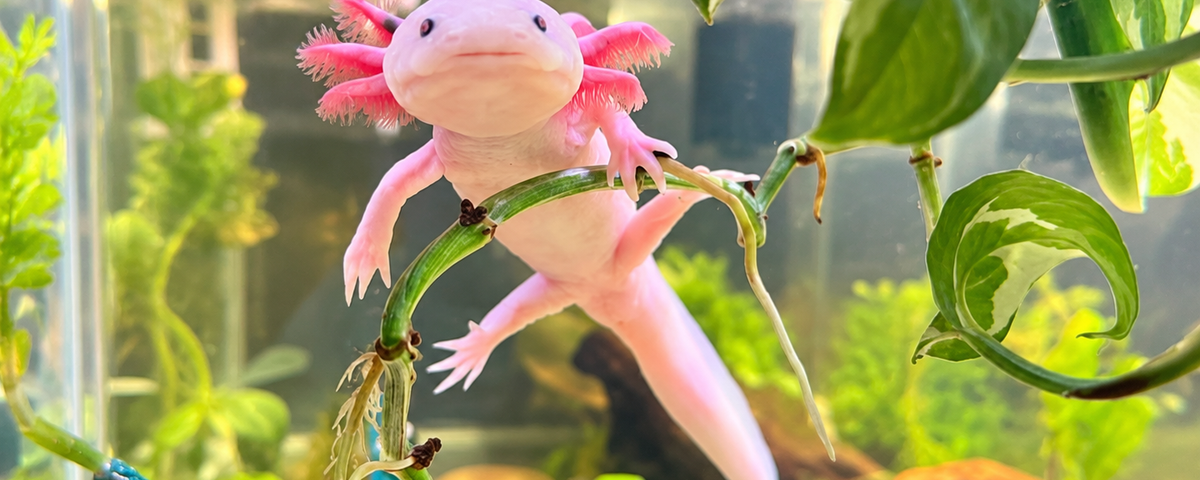
The internet's favourite smiling amphibian can regrow an entire lost limb, and possibly parts of its own heart and brain. Before you buy one for your Gurugram apartment, here's what that genuinely means for keeping one alive and well.
Axolotls: The "Walking Fish" That Regrows Its Own Limbs, Should You Really Keep One?
By Dr. Brajmadhuri, TruVet Pet Care Clinic, Sector 79, Gurgaon
The internet's favourite smiling amphibian can regrow an entire lost limb, and possibly parts of its own heart and brain. Before you buy one for your Gurugram apartment, here is what that genuinely means for keeping one alive and well.
Few animals have taken over the internet quite as thoroughly as the axolotl, with its permanent smile, feathery external gills, and genuinely remarkable regenerative ability. It looks almost too strange and charming to be real, and the biology behind it is every bit as extraordinary as the internet fame suggests. What gets considerably less attention is what actually goes into keeping one alive and healthy, particularly somewhere as hot as Gurugram.
What an axolotl actually is
Despite the popular nickname walking fish, an axolotl is not a fish at all. It is a neotenic salamander, a species of amphibian that retains its juvenile, aquatic form permanently throughout its entire life rather than metamorphosing into a land dwelling adult the way most salamanders eventually do. This is exactly why an axolotl keeps its external, feathery gills and stays fully aquatic even as a genuinely mature adult, unlike almost every other salamander species.
The genuinely extraordinary regeneration
This is the part that has made the axolotl a favourite subject of serious scientific research well beyond its internet fame. An axolotl can regenerate an entire lost limb, complete with bone, muscle, and nerve tissue, and can do so repeatedly throughout its life without forming the kind of scar tissue that would permanently limit a human or most other animals recovering from similar damage. Research has also found evidence of axolotls regenerating parts of their spinal cord, and some studies have even explored regeneration involving portions of the heart and brain, making the species one of the most actively studied animals in the entire field of regenerative biology.
Why they are critically endangered in the wild
Despite being so widely kept and bred in captivity around the world, wild axolotls are critically endangered, with their entire natural range limited to a small, heavily degraded network of canals and lakes near Mexico City. Habitat loss, water pollution, and the introduction of invasive fish species that prey on young axolotls have devastated the wild population considerably. This means that whatever fascination draws someone to keeping an axolotl, it is genuinely worth understanding that the captive, pet trade population and the vanishing wild population are, at this point, almost entirely separate stories.
What actually goes into keeping one alive, and why India's heat matters
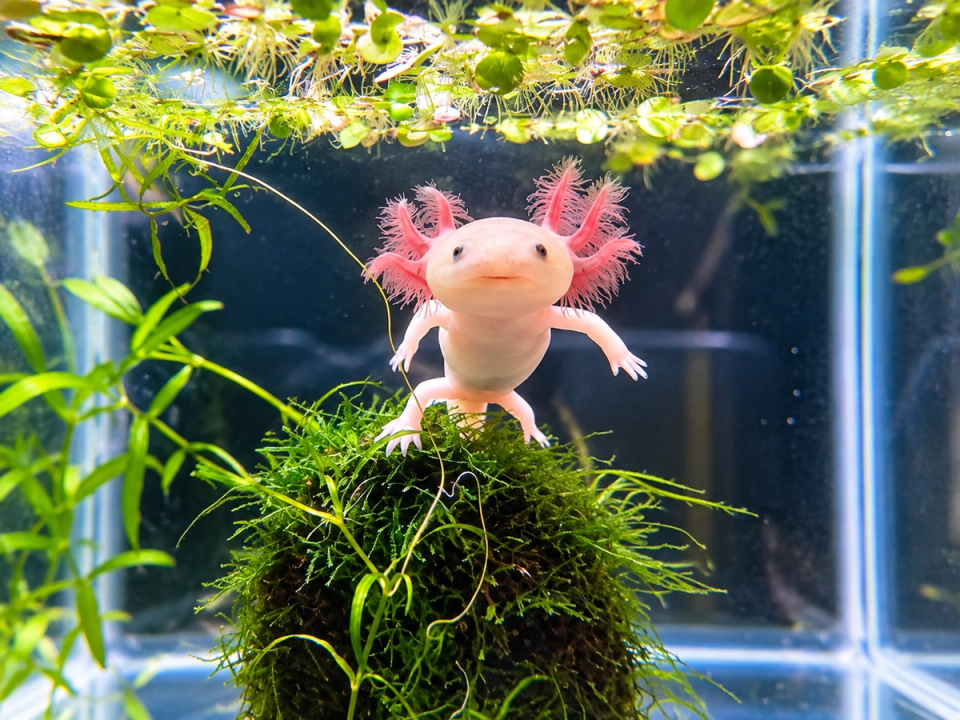
This is where the internet fascination runs into genuine practical difficulty, particularly here. Axolotls need consistently cold water, generally recommended somewhere in the range of sixteen to eighteen degrees Celsius, and they tolerate warmer water considerably worse than most commonly kept aquarium fish do, with sustained higher temperatures causing genuine stress and increasing susceptibility to illness. In a hot Indian climate, and especially through a Gurugram summer, maintaining this kind of consistently cool water essentially requires a dedicated aquarium chiller, not simply an unheated tank, since ambient room temperature alone will run considerably too warm for an axolotl's wellbeing for a large part of the year.
Beyond temperature specifically, axolotls need pristine, carefully cycled water quality, since they are notably sensitive to ammonia and nitrite buildup, along with a properly sized, gently filtered tank, since axolotls do not tolerate strong water currents well given their delicate external gills and generally sedentary nature.
The veterinary access problem worth knowing about honestly
This is a genuinely practical consideration that often gets overlooked entirely in the excitement of getting an unusual pet. Axolotls are a specialised exotic species, and amphibian care sits outside what most general veterinary practices routinely handle day to day, closer to reptile or exotic mammal medicine than typical cat and dog care. It is worth identifying a vet with specific amphibian experience before bringing one home, rather than discovering the gap only once your axolotl is unwell.
What responsible axolotl ownership actually requires
Given everything above, keeping an axolotl well is a genuinely more specialised undertaking than it might appear from a charming video online. It requires a dedicated chiller to maintain consistently cool water, particularly through Indian summers, careful, consistent water quality monitoring given their sensitivity, a properly cycled tank set up in advance of actually bringing an axolotl home, and, ideally, an identified vet or exotic animal specialist you could reach if something does go wrong, established before you need one rather than during an emergency.
The TruVet takeaway
The axolotl's regenerative ability is genuinely one of the most remarkable things in the entire animal kingdom, and it is easy to understand the fascination. Keeping one well, particularly in a hot Indian climate, is a considerably more specialised undertaking than most casual buyers expect, requiring real investment in cooling equipment and water quality management, alongside honest awareness of how limited specialised veterinary care for this species currently is here. If you are genuinely prepared for that level of commitment, an axolotl can be a fascinating companion, but it is worth going in with clear eyes about what that commitment actually involves.
TruVet Pet Care Clinic is located at Shop No 4-6, opposite Bestech Park View Altura, Sector 79, Naurangpur, Gurugram, Haryana 122051. Dr. Brajmadhuri personally handles every consultation, and we are open all seven days from 10am to 8pm for OPD consultation, vaccination, deworming, surgery, and health checkups across a range of pets. WhatsApp us at +91 98710 10355 if you are considering an exotic pet and want honest guidance before bringing one home.
Frequently asked questions.
Can axolotls really regrow any part of their body, including organs?
They are genuinely capable of regenerating entire limbs completely, along with documented regeneration of parts of the spinal cord, and research has explored regeneration involving portions of the heart and brain, though the full extent of organ level regeneration is still an active area of ongoing scientific study.
Is it legal to keep an axolotl as a pet in India?
Axolotls are widely bred in captivity globally, distinct from the critically endangered wild population, and are commonly available through the exotic pet trade, though as with any exotic species, it is worth confirming current import and ownership requirements before purchasing one.
Do I really need an aquarium chiller, or can I just keep the tank in an air conditioned room?
A consistently air conditioned room can help, but most Indian homes do not maintain the kind of stable, sufficiently cool temperature an axolotl genuinely needs year round without a dedicated chiller, particularly during peak summer months.
How long do axolotls typically live in captivity?
With proper care, axolotls can live ten to fifteen years or occasionally longer, which is worth factoring in as a genuine long term commitment rather than a short lived novelty pet.
Can axolotls be kept together in the same tank?
This needs real caution, since axolotls can be prone to nipping at each other's gills or limbs, particularly if kept in a crowded or under-sized tank, so multiple axolotls generally need careful monitoring and adequate space if housed together at all.
What is the biggest mistake new axolotl owners make?
Underestimating the cooling and water quality requirements specifically, often assuming a standard, unheated aquarium setup will be sufficient, when axolotls genuinely need considerably more specialised conditions than most common aquarium fish.
Questions for Dr. Brajmadhuri?
Open all 7 days, 10am to 8pm. Walk-in OPD welcome.