 TruVet Pet Care Clinic
The axolotl gets all the attention for regrowing lost limbs, but it is nowhere near the most extreme example in the animal kingdom. Some animals can regrow their entire head, brain included. Here's a genuine tour of nature's most remarkable regeneration abilities.
Beyond the Axolotl: Animals That Regrow Limbs, Tails, Even Their Own Brains
By Dr. Brajmadhuri, TruVet Pet Care Clinic, Sector 79, Gurgaon
The axolotl's ability to regrow an entire lost limb rightly gets a lot of attention, and it is a genuinely remarkable trick. It is also, once you look wider across the animal kingdom, far from the most extreme example of biological regeneration out there. Some animals can lose the vast majority of their body and simply grow it back, brain included, which puts even the axolotl's abilities into a more modest perspective.
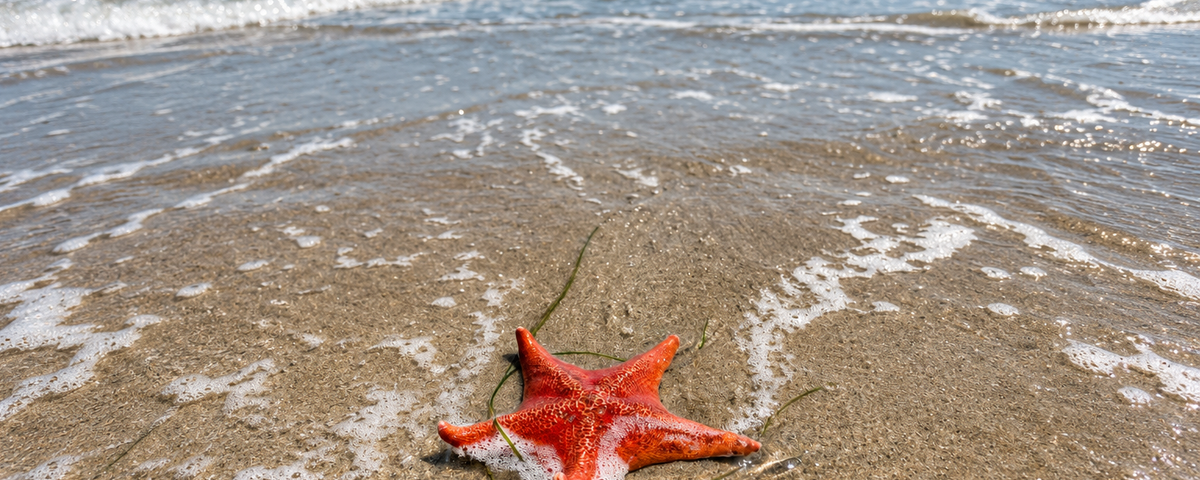
Starfish, regrowing an entire body from a single arm
Starfish possess a genuinely remarkable regenerative ability that goes well beyond simply healing an injury. When threatened, many starfish species will deliberately shed an arm entirely, a process called autotomy, allowing the animal to escape a predator while the lost limb slowly regenerates over a period of months or occasionally years. In some species, this ability goes even further, and an entire new starfish can regenerate from a single detached arm, provided a portion of the animal's central disc remains attached to it. Some species can even regenerate multiple arms simultaneously after an injury, briefly creating an unusual, asymmetrical shape before eventually settling back into the characteristic five armed symmetry most people recognise.
Planarian flatworms, the true extreme of the animal kingdom
If starfish sound remarkable, planarian flatworms take regeneration to a genuinely almost unbelievable extreme. These small, non-parasitic flatworms possess what may be the most extreme regenerative capacity found anywhere in the animal kingdom. Cut a single planarian into pieces, and each individual piece can regenerate into a complete, fully functional worm, head, brain, and all. This is possible because planarians carry a population of adult stem cells distributed throughout their body, which activate at the site of any injury and can differentiate into whatever specific tissue is needed to rebuild a complete, correctly oriented animal, with a head reliably forming at the front of a given fragment and a tail forming at the back, regardless of how small that individual fragment actually is.
Lizard tails, and the clever trick behind how they detach
Many lizard species, geckos and anoles among them, are capable of a defensive trick called autotomy, deliberately shedding a portion of their own tail to distract a predator and escape. This is not a random, uncontrolled tear. A lizard's tail contains specific, pre-built fracture planes, weak points built directly into the tail's structure specifically designed to allow clean separation with minimal bleeding. Once detached, the shed tail continues wiggling vigorously for several minutes on its own, a genuinely effective decoy that buys the lizard time to escape while a predator remains distracted by the still moving tail.
Regrowing the tail afterward is a genuinely costly undertaking for the lizard, drawing significant energy away from growth and reproduction for a period that can range from several weeks to several months depending on the specific species involved. It is also worth knowing that the regrown tail is not identical to the original. The new tail is supported by a continuous cartilage rod rather than the original's segmented, fracture plane containing vertebrae, which means a regrown tail typically cannot be shed again in quite the same controlled way, at least not at the same point along its length.
Why axolotls remain genuinely special despite all this
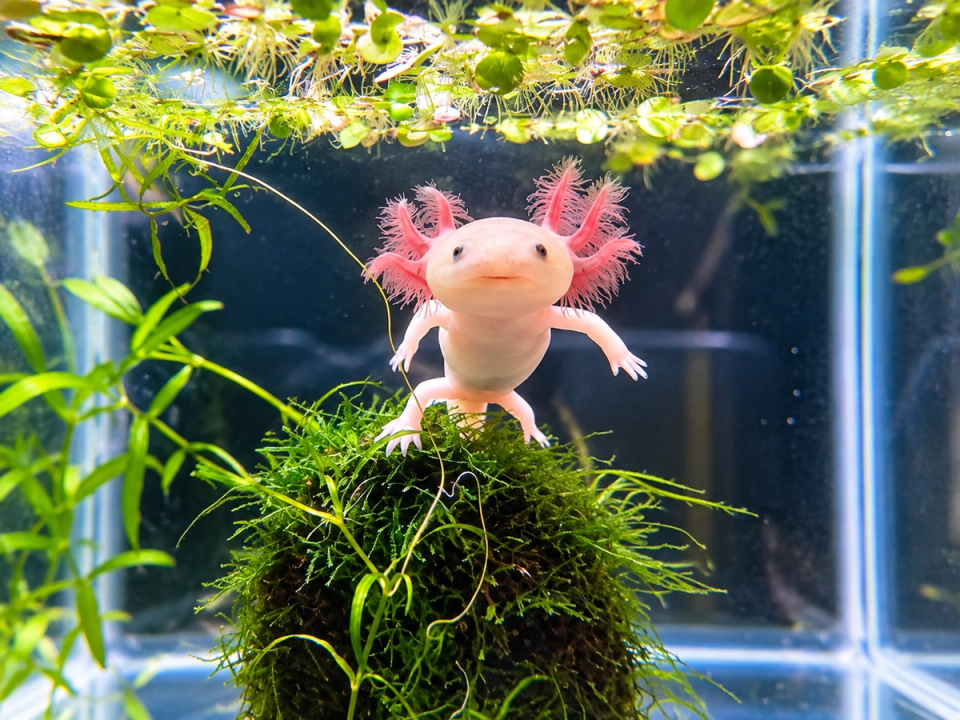
None of this diminishes what makes the axolotl remarkable in its own right. Unlike a lizard's tail or a starfish's arm, an axolotl can regenerate an entire functional limb, complete with correctly formed bone, muscle, and nerve tissue, repeatedly throughout its life, without forming the kind of scar tissue that would permanently limit a human recovering from similar damage. Research has also found evidence of axolotls regenerating portions of their own spinal cord, an ability considerably rarer across the animal kingdom than limb regrowth alone.
Why scientists study all of this so closely
Understanding exactly how these different animals achieve such extreme regeneration is not simply a matter of curiosity. Each of these systems, the axolotl's limb regrowth, the planarian's complete body reconstruction, and the general biology of tissue regrowth seen across this wider group of animals, is actively studied for genuine insight into regenerative medicine, since understanding the specific cellular and genetic mechanisms involved could eventually inform how human tissue repair and regeneration might be improved.
The TruVet takeaway
The axolotl's ability to regrow a lost limb is genuinely remarkable, and it is also just one point along a considerably wider spectrum of regenerative ability found across the animal kingdom. Starfish regenerating an entire body from a single arm, planarian flatworms rebuilding a complete animal, brain included, from the smallest fragment, and lizards shedding and regrowing tails through carefully engineered fracture points all represent genuinely different, equally fascinating biological solutions to the same basic challenge, surviving serious injury and rebuilding what was lost.
TruVet Pet Care Clinic is at Shop No 4-6, opposite Bestech Park View Altura, Sector 79, Naurangpur, Gurugram, Haryana 122051. Dr. Brajmadhuri personally examines every patient, and we are open all seven days from 10am to 8pm for OPD consultation, vaccination, deworming, surgery, and health checkups for dogs and cats. WhatsApp us at +91 98710 10355 for anything your own pet needs, regenerative superpowers notwithstanding.
Frequently asked questions.
Can a planarian really regenerate from literally any small piece of its body?
Yes, this is genuinely one of the most extreme documented cases of regeneration in the animal kingdom, with a complete, fully functional worm capable of regrowing from a remarkably small starting fragment, provided the underlying stem cell population is present.
Does a regrown lizard tail work exactly the same as the original?
Not entirely. The regrown tail is supported by a continuous cartilage rod rather than the original's segmented vertebrae, and it typically cannot be shed again in quite the same controlled way at the same point along its length.
How long does it actually take a starfish to regrow a lost arm?
This varies by species, but the process generally takes several months, and in some cases can extend to a year or more before the new arm reaches full size and function.
Is there any connection between studying these animals and actual human medicine?
Yes, genuinely. Researchers studying axolotls, planarians, and other highly regenerative animals are actively looking for insight that could eventually inform human tissue repair and regenerative medicine more broadly.
Do any common pets have anything close to this level of regenerative ability?
No, dogs and cats do not share anything close to this level of regeneration, and any significant injury in a pet genuinely requires proper veterinary treatment rather than an expectation of natural regrowth.
Why don't humans regenerate limbs the way some of these animals do?
Human tissue generally heals through scar formation rather than the kind of complete tissue regrowth seen in animals like axolotls and planarians, a genuine difference in the underlying biological healing process that researchers are still working to fully understand.
Questions for Dr. Brajmadhuri?
Open all 7 days, 10am to 8pm. Walk-in OPD welcome.